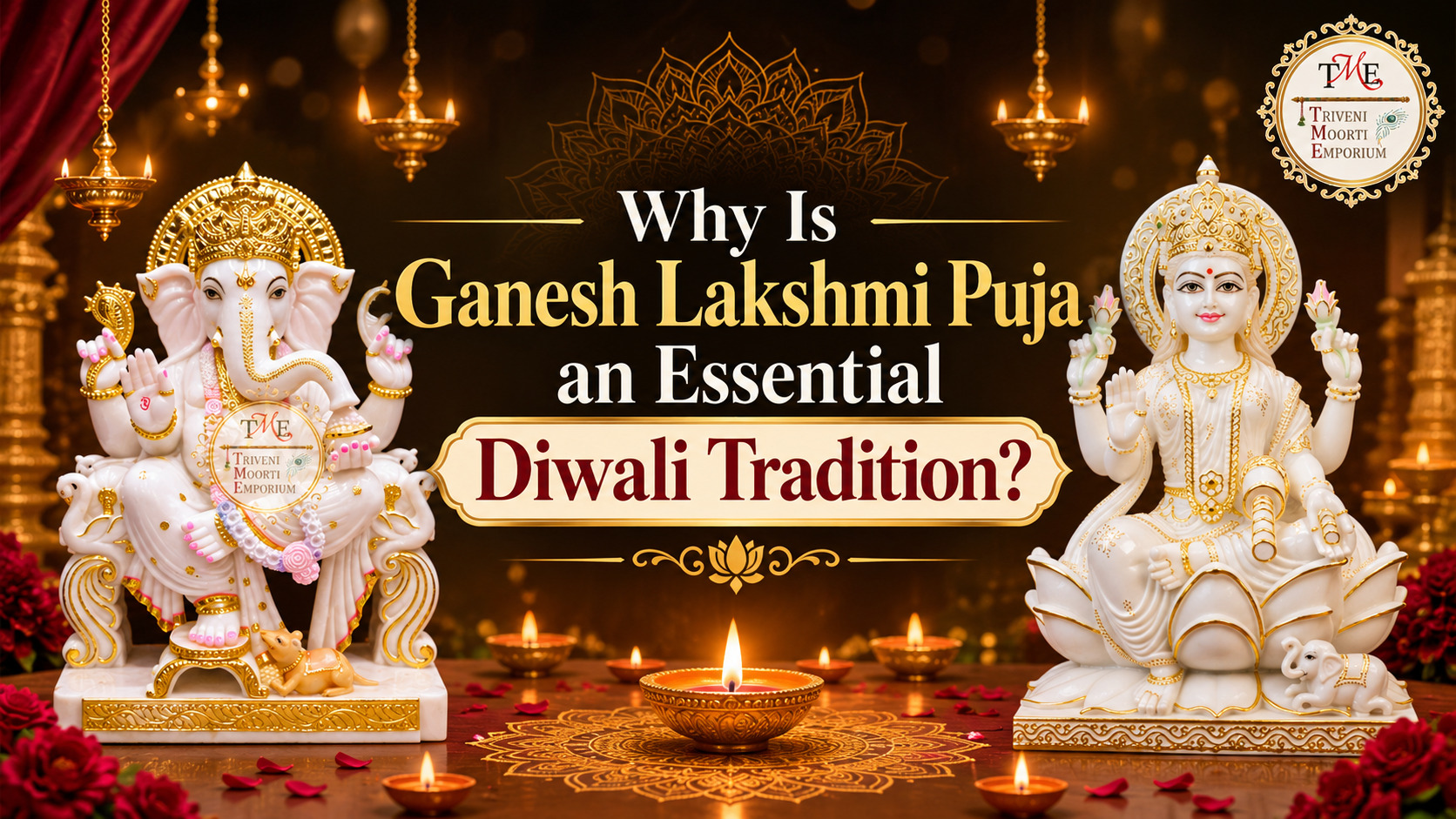
Diwali, the festival of lights, is one of the most significant celebrations in Hindu culture. It symbolises the victory of good over evil, light over darkness, and knowledge over ignorance. One of the most important traditions associated with Diwali is the worship of Lord Ganesha and Goddess Lakshmi together. Across Indian households, devotees perform Ganesh Lakshmi Puja to seek wisdom, prosperity, happiness, and good fortune for their families.
But why are Lord Ganesha and Goddess Lakshmi worshipped together during Diwali? What is the spiritual meaning behind this tradition, and why is their presence considered auspicious for a home? Understanding the religious and cultural significance of this ritual helps devotees appreciate the deeper meaning of Diwali celebrations.
For families preparing for Diwali 2026, choosing beautiful idols, decorating the home temple, and performing traditional puja rituals are also meaningful ways to welcome the festive season.
What Is the Significance of Ganesh Lakshmi Puja During Diwali?
Ganesh Lakshmi Puja represents the combination of wisdom, prosperity, success, and positive beginnings. According to Hindu beliefs, Goddess Lakshmi is worshipped as the goddess of wealth, abundance, fortune, and prosperity, while Lord Ganesha is revered as the remover of obstacles and the god of wisdom, intelligence, and auspicious beginnings.
Worshipping both deities together reflects the belief that wealth should be accompanied by wisdom and responsibility. Financial prosperity becomes more meaningful when individuals use their resources thoughtfully, make good decisions, and maintain harmony within their families.
During Diwali, devotees clean and decorate their homes, light diyas, prepare sweets, and perform Lakshmi Ganesh Puja. These rituals express gratitude, devotion, and the hope for a prosperous year ahead. The tradition also reminds people that true prosperity includes mental peace, good health, knowledge, and spiritual well-being.
Why Are Lord Ganesha and Goddess Lakshmi Worshipped Together?
The tradition of worshipping Lord Ganesha and Goddess Lakshmi together has a deep spiritual meaning in Hinduism. Both deities represent qualities that complement each other and are considered important for a balanced and fulfilling life.
Goddess Lakshmi represents wealth, prosperity, beauty, abundance, and good fortune. Her blessings are traditionally associated with financial stability, success in business, and material well-being. Devotees worship her to seek abundance and happiness in their personal and professional lives.
Lord Ganesha represents intelligence, knowledge, determination, and the ability to overcome obstacles. He is worshipped before beginning important activities because devotees seek his blessings for a smooth and successful journey.
Together, their worship symbolises the importance of combining prosperity with wisdom. Wealth without good judgement may not bring lasting happiness, while knowledge and determination help individuals use opportunities and resources effectively. This is why Ganesh Lakshmi Puja holds such an important place in Diwali celebrations.
Why Is Lord Ganesha Worshipped Before Goddess Lakshmi?
In Hindu religious traditions, Lord Ganesha is generally worshipped first before beginning auspicious ceremonies and religious rituals. This practice is known as Ganesh Vandana or invoking Lord Ganesha.
Lord Ganesha is known as Vighnaharta, meaning the remover of obstacles. Devotees believe that remembering him at the beginning of a puja helps remove difficulties and creates an auspicious environment for the ceremony.
During Diwali Lakshmi Puja, worshipping Lord Ganesha first symbolises the importance of seeking wisdom and removing obstacles before welcoming prosperity. It also represents the belief that success should begin with positive intentions, clear thinking, and good actions.
This traditional sequence is followed in many Hindu households, temples, and religious celebrations, making Ganesh worship an essential part of Diwali puja.
What Does Goddess Lakshmi Represent During Diwali?
Goddess Lakshmi is one of the most revered deities in Hinduism and is worshipped as the goddess of wealth, prosperity, fortune, and abundance. Diwali is traditionally associated with welcoming Goddess Lakshmi into homes and inviting happiness and prosperity into family life.
Her worship is particularly significant on the main Diwali evening, which is associated with Lakshmi Puja. Devotees decorate their homes with rangoli, flowers, diyas, and lights to create a welcoming atmosphere.
Goddess Lakshmi is also associated with spiritual and intellectual prosperity. Her blessings are not limited to financial wealth but are traditionally connected with peace, generosity, contentment, and overall well-being.
During Diwali, families often place Lakshmi Ji and Lord Ganesha idols together in their home temples or puja spaces. A beautifully crafted Lakshmi marble moorti can become a meaningful part of this sacred setting while reflecting traditional Indian craftsmanship.
Important Rituals Performed During Ganesh Lakshmi Puja
Ganesh Lakshmi Puja involves several traditional rituals that vary across regions, families, and religious customs. However, certain practices are commonly followed during Diwali celebrations.
The preparation usually begins with cleaning the house and decorating the puja area. Many families create rangoli designs near the entrance, arrange fresh flowers, and light diyas to symbolise positivity and the victory of light over darkness.
The idols or images of Lord Ganesha and Goddess Lakshmi are placed respectfully on a clean platform. Devotees offer flowers, fruits, sweets, incense, and traditional prasad. The puja begins with prayers to Lord Ganesha, followed by the worship of Goddess Lakshmi.
Lakshmi Aarti and Ganesh Aarti are performed as expressions of devotion and gratitude. Families also pray for prosperity, wisdom, happiness, and success in the coming year.
These rituals are not simply religious activities; they bring family members together and help preserve cultural values and traditions across generations.
Why Are Marble Ganesh and Lakshmi Idols Popular for Diwali Puja?
Marble idols have long been valued in Indian religious art because of their elegant appearance, durability, and traditional craftsmanship. Many families prefer marble idols for their home temples because they complement different mandir designs and create a peaceful devotional atmosphere.
A beautifully crafted Ganesh Lakshmi Marble Moorti represents the traditional combination of wisdom and prosperity. These idols are available in different sizes, postures, carving styles, and artistic finishes, allowing devotees to select designs according to their preferences and available puja space.
A Marble Ganesh Lakshmi Idol can be an appropriate choice for families looking to establish a dedicated worship space during Diwali. Similarly, a Lakshmi Ganesh Marble Statue can enhance the appearance of a home mandir while maintaining the religious significance of the festival.
A Ganesh Marble Statue for Home Temple is also a popular choice because Lord Ganesha is worshipped before beginning auspicious activities. Devotees may also consider a separate Marble Lakshmi Ji Murti for their daily worship and Diwali celebrations.
When selecting a marble idol, buyers should consider the quality of the marble, finishing, carving details, proportions, and overall craftsmanship. Choosing an idol that suits the dimensions and design of the home temple helps create a balanced and aesthetically pleasing worship space.
What Is the Role of Saraswati in Diwali Worship?
Along with Lord Ganesha and Goddess Lakshmi, Goddess Saraswati also holds an important place in Hindu religious beliefs. She is worshipped as the goddess of knowledge, learning, music, wisdom, and creativity.
While Ganesh Lakshmi Puja is central to many Diwali celebrations, some families and traditions also worship Goddess Saraswati during the festive period. Her presence represents the importance of education, intellectual development, and knowledge in achieving meaningful success.
The association of these three deities represents a broader understanding of prosperity. Goddess Lakshmi symbolises abundance, Lord Ganesha represents wisdom and the removal of obstacles, and Goddess Saraswati represents knowledge and learning.
Families who maintain a dedicated home temple may choose a Saraswati Marble Moorti alongside other marble god idols. This allows them to create a devotional space that reflects the importance of knowledge, prosperity, and positive beginnings.
How to Choose the Right Ganesh Lakshmi Murti for Diwali Puja?
Choosing the right idol is an important part of preparing for Diwali worship. A suitable Lakshmi Ganesh Murti for Diwali Puja should reflect the family's devotional preferences while fitting comfortably within the available worship space.
Before purchasing an idol, consider the following factors:
Marble Quality: Check the natural appearance, durability, and finishing of the marble. Makrana marble is particularly valued in Indian marble craftsmanship for its traditional appeal.
Carving and Detailing: Examine facial expressions, ornaments, decorative elements, and finishing. Well-executed carving enhances the overall appearance of the idol.
Size and Proportions: Select an idol according to the dimensions of your home temple, pooja room, or dedicated worship area. The idol should have sufficient space around it.
Design and Posture: Ganesh and Lakshmi idols are available in different traditional designs and postures. Choose a design that aligns with your family's religious preferences.
Craftsmanship: Look for consistent detailing, smooth finishing, and carefully carved features. Reliable craftsmanship contributes to the idol's visual appeal and longevity.
Selecting a well-crafted idol makes the home temple more welcoming and helps families maintain their traditional worship practices.
Why Choose a Reliable Marble Moorti Manufacturer?
When purchasing marble religious idols, choosing an experienced Marble Moorti Manufacturer can make a significant difference in product quality and craftsmanship. Skilled artisans understand traditional idol-making techniques and pay attention to important details such as proportions, expressions, ornaments, and finishing.
A reliable manufacturer may offer different collections of Ganesh marble statues, Lakshmi marble moorti, Saraswati idols, and other Marble God Idols for Home Temple. Buyers can explore different designs according to their preferences, temple dimensions, and decorative requirements.
For customers looking for traditional Indian marble craftsmanship, working with an established manufacturer also provides an opportunity to explore custom designs, different idol sizes, and detailed carving options.
Whether selecting a Ganesh marble statue for daily worship or a beautiful Lakshmi marble moorti for Diwali, prioritising marble quality and artisan craftsmanship can help you make a suitable long-term choice.
Conclusion
Ganesh Lakshmi Puja is an essential Diwali tradition because it represents the importance of wisdom, prosperity, happiness, and positive beginnings in life. Worshipping Lord Ganesha and Goddess Lakshmi together reminds devotees that true success involves more than material wealth; it also requires knowledge, good decisions, gratitude, and spiritual well-being.
As Diwali 2026 approaches, families can celebrate this meaningful tradition by decorating their home temples, performing traditional rituals, and selecting beautifully crafted marble idols. A thoughtfully chosen Ganesh Lakshmi Marble Moorti, Lakshmi marble moorti, or Saraswati Marble Moorti can become a valuable part of a family's devotional space and help preserve India's rich tradition of marble idol craftsmanship.

